This past week I continued to make progress on the plans for my upcoming Brooklyn genealogy trip. As discussed, I’m treating this like a fact-finding mission or a business trip. I have so much I want to get done, so much to see and experience—being strategic is the only way to do that.
Hotel and flight have been pinned down. Bodegas and Italian bakeries have been added to my big Google map. And I’m going to try to squeeze in a photography exhibit. All the important stuff.
Wins!
Genealogists will tell you that only a fraction of records have been digitized. So in this before-trip time, I’m doing all the online database work I can, but also identifying what I should aim for when I’m on the ground in New York.
You can book a free half-hour online consultation, and one of their four genealogy librarians will walk you through their offerings. She was great about explaining their processes and setting expectations. While my specific surnames aren’t getting hits in their databases, she helped me find resources that may be useful for larger-context searches.
So in other words, I will definitely be going to the Ghostbusters library!
Reaching out to the Center for Brooklyn History got me a nice email answer and some helpful links. I will definitely follow up on those, as I expect to be spending a lot of time there.
As I had anticipated, finding experts to talk to about candy/baseball/alcohol is slow going. My cold-call emails are are getting nos in return or no responses at all. It’s a bit of a bummer, but I knew this might happen.
if I can’t find an expert to talk to, I can still get informed. I’m already learning about pre-Dodgers Brooklyn baseball… and starting to question whether my relative REALLY played for Ned Hanlon.
Planning the big genealogy trip that I’ve been talking about for years.
“The profession of “fact-finding“ is mostly encountered in companies where people are sent to investigate. … From an artistic point of view, fact finding is about working with first-hand experiences, not with references. The important thing to keep in mind is that the truth is not the ultimate goal in this process.” — Alex Bodea, operator of The Fact Finder art gallery
This spring we finally made it back to New York and Brooklyn. It was the first time my husband and I had managed to get there since 2019, with two cancelled attempts between then and now. It was far past time.
Unlike our previous trips, this time I planned no genealogy activities. I wanted this visit to be purely vacation. So no to archives, libraries, or spontaneous research sidetracks that erode people’s patience and time. Yes to museums and tea shops and bakeries. Yes to getting a slice, and a detour to Coney Island. Yes to an Italian restaurant that felt very much like being at someone’s house. Yes to a trip about life, not the dead.
We did visit a cemetery, but one without any of my people in it. It was fine.
And yet.
On our way to LaGuardia I caught sight of the old Domino Sugar factory, and thought wistfully again about Benjamin Huppler. My 3x great-grandfather, he was a Swiss confectioner who ran a candy shop in Brooklyn for many years.
As I’ve mentioned, Brooklyn is the core of my proudest genealogy work. The borough was home for two of my great-grandparents, and the nebula of family around them. I knew none of this history while I was growing up—but without any documented history, this branch has been mine to explore. From the one name I started with I now have generations. I have brought entire people back to light, even the smallest and the forgotten. And while I’ve been able to uncover a few things about Benjamin Huppler, it’s never been enough.
My great-great-great grandfather.
I found myself saying out loud the thing that I’ve said on every single visit: “I should just spend a week here, and just work on genealogy.”
This time my brain came back with: “You could DO THAT, you know?”
****
And my brain was right: I absolutely could. I’m lucky to have a generous vacation policy through my employer, so getting the time off is not a problem. I’ve traveled solo before. With some planning, the expenses could be managed. I can handle the MTA. The whole thing is entirely doable.
In the weeks since the idea crystallized, I’ve started to conceptualize what this trip might look like. I keep using that word for it, “conceptualize,” as if I were designing a jungle adventure for 100 people instead of a trip to archives and libraries for just one person, who is also me.
Seeing the sights, hitting the heights
I’ve also told people that it’s a fact-finding tour, which sounds impressive, like I’m carrying a briefcase and fixing a crisis.
But after reading that Bodea quote, it fits. I’m going in person because while online research can be amazing, it’s nothing like standing in the church your great-great grandparents attended. In person, I can have the first-hand experiences that shift genealogy from research into time travel.
****
The Plan as it Stands
People-Focused: There are three particular relatives I want to know more about.
3X great-grandfather Benjamin Huppler, the candymaker mentioned above.
Great-granduncle Gus Weinpahl. Semipro ball player in Brooklyn, Sayville, and Connecticut, from about 1895-1910. He later went on to run his own candy shop and then a café. I bet he had a time.
Gus
Gus’ father and my great-grandfather Justus Weinpahl. German immigrant, Civil War veteran. Buried at Green-Wood. He operated a liquor-dealing business (like a wholesaler) for almost 40 years. My hunch/hope has always been that this kind of business could have put him in connection with government officials and also less savory types (Brothels? Bars? Race tracks?).
Hence my theme: “Candy, Baseball, Alcohol.” Because doesn’t that sound fun?
If I can’t learn about these men specifically, I want to know more about their worlds. Ideally, I am hoping to connect with some experts in these histories. I want to hire them for an hour so I can ask questions and learn more.
Location-Focused: On a broader family level, I want to visit some of the spots around Brooklyn that might have more resources than I can access online. That would be places like the Othmer Library, the church that I mentioned, and other places I can identify ahead of time. (And this time, I’ll be making strategic visits to investigate specific research items—no fishing expeditions.)
I may also take a day to go back to Green-Wood Cemetery and hunt down some of the graves that eluded me on my previous visits. With enough time, maybe I could visit TWO cemeteries.
That’s the strategy, for now. It occurred to me just today that I could probably also squeeze in a trip to the New Jersey town where my grandparents met. No doubt the plans will continue to shift as the months roll on.
****
The one thing I can’t plan—and don’t like to think about much—is what happens when this trip is done. I can’t imagine being done with Brooklyn, but if this trip is meant to answer some of my longstanding Brooklyn questions, what comes after that?
I also know that there is a finite amount of facts and information out there for me to uncover. What if I’ve already found most of it?
How to start with not even a name, and end up at a love story.
Last week my ancestors—probably in cahoots with the algorithm at FamilySearch.com—slid another surprise birth certificate in front of my face. “Let her try this one…” I’m sure they snickered.
Mystery “Weinpall” birth certificate from New York City Municipal Archives.
Well they should, as it didn’t list a name or even indicate the child’s sex. It granted me only a birthdate from 1881, and the names of my great-great grandparents, at their home address. It was just enough information to get my attention, and not enough to exactly match any established relatives. The ancestors know what they’re doing.
But despite their best efforts, I found it, and fast. And then I discovered an array of records. Piecing those together revealed a life unlike anyone else I’ve researched so far, and unlike anyone else in my family.
Earlier this week my Twitter feed blew up. Reclaim the Records, a nonprofit advocacy group, announced that they had received access to the scanned birth, death, and marriage records held by New York City’s Department of Records and Information Services. A beta website would be immediately forthcoming.
Genealogists’ work is often done by inches, record by record, because municipal governments like to hold on to their documents very tightly. You pay a fee, and then wait 6 weeks, or maybe 6 months to get one piece of paper. If they can find it at all.
Watching a bunch of history geeks get unfettered access to thousands of scanned records, for free, RIGHT NOW, was like watching a pinata burst open. It’s just that the pinata was full of old, handwritten papers, and the kids were actually adults. For genealogists, this is the best kind of party.
I had happily imagined a pile of family photos. I didn’t bother thinking about what might be on the back of them.
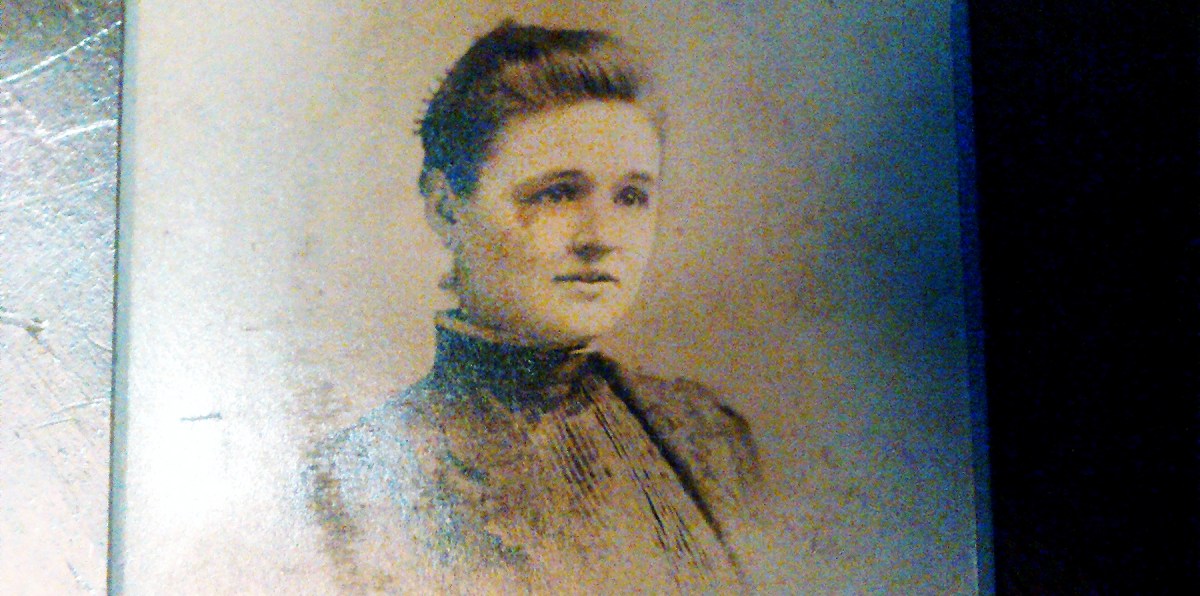
This woman’s face drifted up to me this week. She came out of a pile of photos, a randomly selected card in a shuffled deck of memories. It has been some days, but I keep going back to her although — and maybe because — I have no idea who she is.







 Graveyard Snoop